
Keynotes
2026 Featured Keynote Speakers
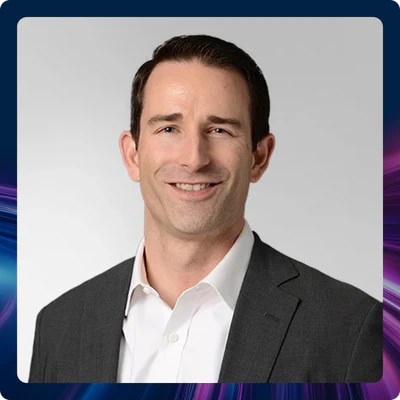
Scott Armul
Chief Product & Technology Officer,
Vertiv

Shinichiro Gomi
Senior General Manager,
Mitsubishi Heavy Industries, Ltd.
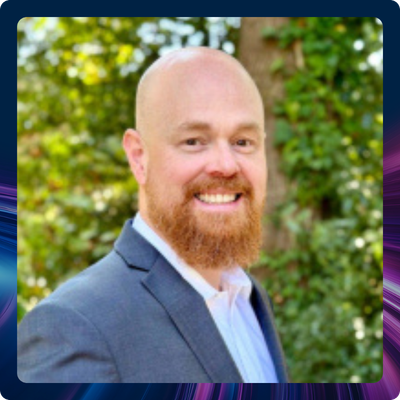
Sean James
Distinguished Engineer – Energy Systems, NVIDIA
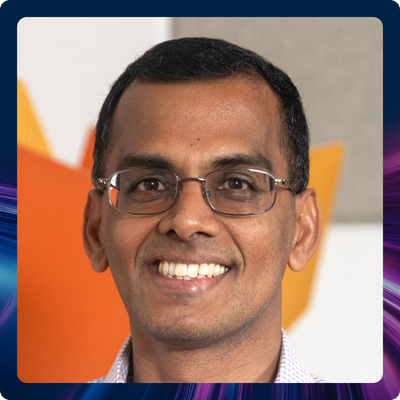
Ram Nagappan
Vice President, AI Infrastructure,
Oracle Cloud Infrastructure
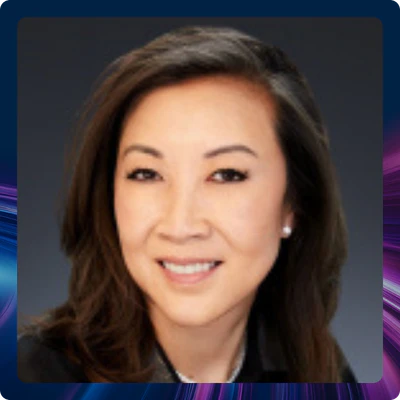
Madonna Park
Chief Financial Officer,
Switch
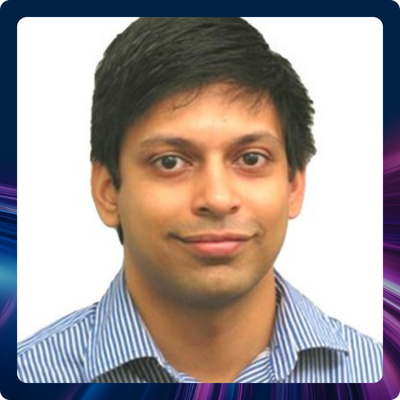
Varun Sakalkar
Distinguished Engineer,
Google Datacenters

Jim Simonelli
CTO and SVP, Secure Power Division,
Schneider

Joe Theismann
World Champion Quarterback, Emmy award-winning ESPN analyst, Author, and Entrepreneur
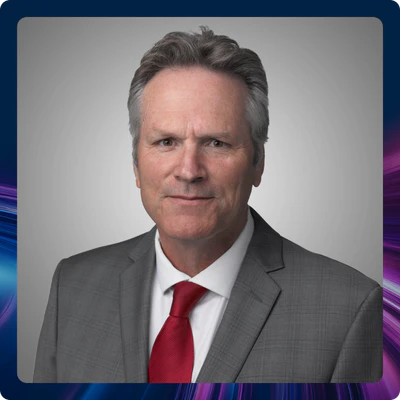
Mike Dunleavy
Governor,
State of Alaska
Innovation at Hyperscale: Building the AI Factories Powering the Next Decade of Digital Infrastructure
Featured Keynote
When: Wednesday, April 22, 2026 | 8:30 am to 9:45 am
Location: Ballrooms A & B, 3rd Level
Artificial intelligence is rapidly transforming data centers from traditional IT environments into highly specialized AI factories built for extreme compute density, massive energy throughput, and global scale. As AI workloads accelerate, operators must rethink how infrastructure is designed, powered, cooled, and deployed.
In this keynote, engineering leaders from Oracle, NVIDIA, and Google will share firsthand insights into how hyperscale organizations are building and operating the next generation of AI infrastructure. The discussion will explore the real-world engineering and business decisions behind modern AI data center design.
From securing power in grid-constrained markets to supporting GPU-dense environments and deploying infrastructure faster than ever before, this session will provide a practical look at how leading organizations are scaling the facilities that power the AI economy.
Attendees will learn:
How AI is redefining the data center and transforming facilities into high-performance compute factories.
Strategies for securing and managing power as AI infrastructure pushes energy demand to new levels.
How operators are supporting extreme rack densities and preparing for next-generation GPU environments.
Where liquid and hybrid cooling strategies fit in the future of AI infrastructure.
How hyperscalers are accelerating deployment timelines through modular design and supply chain innovation.
What infrastructure leaders must do today to prepare for the next decade of AI-driven demand.
Keynote Panel
Ram Nagappan
Vice President, AI Infrastructure,
Oracle Cloud Infrastructure
Ram Nagappan is Vice President in AI Infrastructure at Oracle Cloud Infrastructure (OCI) with 20+ years of “chips-to-grid” experience spanning exascale supercomputers and gigawatt-scale AI data centers. He leads AI infrastructure architecture for large-scale AI and HPC platforms, including OpenAI’s Stargate program, combining executive leadership with hands-on involvement in site diligence, grid interconnection, power-plant architecture, data hall layout, and rack-level design for high-density GPU clusters.
Sean James
Distinguished Engineer – Energy Systems,
NVIDIA
Sean James is a Navy veteran and Distinguished Engineer - Energy Systems for NVIDIA, where he's pioneering sustainable data centers and energy solutions. He previously worked in energy and data center research at Microsoft, with over two decades pioneering advanced cloud infrastructure. He led research on data center architecture, power systems, and scaling innovations, including groundbreaking projects like Project Natick (underwater data centers) and integrations of fuel cells, microgrids, and high-density computing.
Varun Sakalkar
Distinguished Engineer,
Google Datacenters
Varun Sakalkar is the Distinguished Engineer in the Datacenter Technology and Systems group for Google Datacenters. As the uberTL for the team, he owns the technology direction for the datacenter systems to achieve lowest TCO and best in deployment, class reliability, sustainability and efficiency for ML and Cloud systems. Varun has been at Google for 15+ years. Prior to that he earned his PhD in computational engineering and Masters in applied math.
Investing at AI Scale: How Switch is Building Infrastructure that Lowers Costs and Leads the Market
Investor Briefing Featured Keynote
When: Monday, April 20, 2026 | 9:10 am to 9:40 am
Location: Room 201 TH
Pass Type: All Access, Industry Conference, or AFCOM Solution Provider pass required to attend the Investor Briefing
Artificial intelligence is driving one of the largest infrastructure investment cycles in modern history. By 2030, global data center power demand is projected to exceed 200 gigawatts, with AI campuses now measured in hundreds of megawatts rather than tens. In this environment, capital discipline, long-term energy strategy, and market alignment separate leaders from followers.
In this CFO keynote, Madonna Park will outline how Switch has positioned itself as a category leader through deliberate capital allocation, large-scale campus development, and deep integration with energy markets. She will discuss how Switch is investing in high-density AI infrastructure while simultaneously advancing grid partnerships that lower long-term electricity costs for ratepayers. At a time when many question whether data center growth burdens communities, Switch offers a differentiated model that aligns infrastructure expansion with economic stability, power innovation, and responsible growth.
Madonna Park
Chief Financial Officer, Switch
Madonna Park is the Chief Financial Officer at Switch and is responsible for the financial management of the company, including leading the Accounting, Finance, Internal Audit and Investor Relations teams. She brings more than 20 years of experience as an investment banker and equity research analyst. Madonna joins Switch after more than 17 years with RBC Capital Markets, where she most recently served as Managing Director and Global Head of Communications Infrastructure. In this role, she was focused on providing companies in the data center and fiber sectors with comprehensive financial advisory services including mergers and acquisitions, leveraged buyouts, recapitalizations and equity and debt underwriting. Madonna has successfully led and executed numerous high-profile M&A and capital market transactions in the data center space across North America, Europe and Asia.
AI Factories: The Physical Engines Driving AI
Diamond Sponsor Keynote - Vertiv
When: Tuesday, April 21, 2026 | 8:30 am to 9:45 am
Location: Ballrooms A & B, 3rd Level
AI facilities are no longer scaling like conventional data centers. As rack densities move from tens of kilowatts toward hundreds, operators are managing a new class of infrastructure challenge: power, thermal, controls, white space, and services now behave as one interdependent system. In this session, Scott Armul will present a practical operator framework for planning and scaling AI infrastructure as a physical AI engine, where the facility itself becomes part of the compute equation.
The session will address four realities shaping AI deployments today: extreme densification, compressed time-to-capacity (time to token), rapid campus-scale expansion, and the operational risk created by disparate systems. Scott will outline how operators can reduce these risks by shifting from component-by-component decisions to a converged infrastructure approach that integrates the power train, thermal chain, and controls/services layer as a coordinated system.
Attendees will also see how repeatable AI building blocks—such as 12.5 MW units scaled into larger campus architectures—can improve deployment predictability, reduce onsite complexity, and preserve flexibility across future compute generations. The emphasis is on operational outcomes: faster deployment, better utilization, and lower integration friction at scale.
Attendees will leave with three takeaways:
1. A clear framework for treating AI facilities as integrated physical systems, not isolated infrastructure domains.
2. A practical scaling model for using repeatable building blocks to accelerate deployment while maintaining flexibility.
3. An operator-focused approach to converged power, thermal, and controls integration that improves reliability, efficiency, and time-to-capacity.
Scott Armul
Chief Product & Technology Officer, Vertiv
Scott Armul was named Chief Product and Technology Officer on January 1, 2026, leading Vertiv’s Technology Office, engineering research and development, and the business units comprising Vertiv's portfolio of solutions, including thermal management, power management, IT systems, infrastructure solutions, and global services. He served as Vertiv’s Executive Vice President, Global Portfolio and Business Units from January 1, 2025, to December 31, 2025.
Scott began his career with Emerson Network Power (now Vertiv) in 2009 as an MBA Intern in Business Planning and Development and then transitioned into a permanent position as a Strategic Planner in 2010. He progressed through various leadership roles in the company, including Strategic Planning from June 2010 - June 2012, Senior Marketing Manager for Emerson Energy Systems from June 2012 - August 2015, Director of AC Power Product Management from August 2015 – February 2017, Vice President and General Manager of DC Power and Outside Plant for the Americas from February 2017- January 2018, and Vice President and General Manager of Global DC Power and Outside Plant Solutions from January 2018 - July 2022.
Sponsored By:

Powering the Megawatt Era: The role of 800VDC in the Future of Data Center Energy
Diamond Sponsor Keynote - Schneider Electric
When: Wednesday, April 22, 2026 | 8:30 am to 9:45 am
Location: Ballrooms A & B, 3rd Level
As data centers and high-performance computing environments scale to unprecedented levels, traditional power distribution architectures face critical limitations. This presentation explores the next frontier in energy delivery: the 1 MW rack and the evolution beyond sidecar designs through advanced 800 VDC strategies. We will examine how VDC optimizes efficiency, reduces losses, and supports the growing demands of AI workloads and hyperscale infrastructure.
Attendees will gain insights into design considerations, safety standards, and integration approaches that enable sustainable, high-density power distribution for future-ready facilities. Join us to understand why 800VDC is not just an alternative—it’s the foundation for powering the next generation of compute.
Key Takeaways:
High-voltage direct current (HVDC) architectures are essential for meeting the massive power demands of AI workloads and hyperscale data centers. Moving beyond traditional sidecar designs unlocks the ability to support 1 MW racks efficiently.
HVDC reduces conversion losses, improves energy efficiency, and minimizes infrastructure footprint—critical for sustainable, future-ready facilities.
Learn how optimized HVDC strategies lower operational costs while supporting green initiatives. Implementing HVDC at scale requires careful attention to design considerations, safety standards, and integration approaches.
These best practices ensure reliable, secure, and scalable power distribution for next-generation compute environments.
Jim Simonelli
CTO and SVP, Secure Power Division, Schneider
Jim Simonelli, senior vice president and chief technology officer of the Secure Power and Data Center Business at Schneider Electric, leads R&D deployment, common platforms development, and forward-looking activities. With prior experience in leadership positions at Schneider Electric and a venture-backed startup, he brings extensive expertise in technology and innovation.
Sponsored By:

Joe Theismann: Managing to Win and Sustaining Success
Featured Keynote
When: Thursday, April 23, 2026 | 8:45 am to 10:00 am
Location: Ballrooms A & B, 3rd Level
In his charismatic and entertaining style, Joe Theismann draws parallels between his successful career as an NFL quarterback and the business challenges facing leaders at this moment in the data center industry. Joe will explore what it takes to seize opportunities like industry leaders face today and also what it takes to stay on top and sustain success, season after season. He’ll share his experience with effective leaders who know how to listen to people, trust them, and motivate individuals to take ownership of team goals. During a career that included bringing a Super Bowl championship to Washington, Joe earned both the NFL league MVP for his performance and NFL Man of the Year honors for his community service work off the field.
Joe Theismann
World Champion Quarterback, Emmy award-winning ESPN analyst, Author, and Entrepreneur
Losing his successful football career at 35 to a serious injury, Joe Theismann learned firsthand how to think, analyze, and reinvent in the face of adversity and change.
Joe Theismann is an entrepreneur and the former star quarterback for the Washington Redskins. Most recently, he spent the last 2 decades working for ESPN and the NFL Network as an NFL analyst. A 12-year NFL veteran, Joe played in 163 consecutive games from 1974-1985 for the Washington Redskins and holds team records for passing yardage (25,206), completions (2,044), and attempts (3,602). He was a two-time Pro Bowl selection and Pro Bowl MVP, leading Washington to a 27-17 victory over the Miami Dolphins in Super Bowl 17.
Joe was selected as the NFL's Man of the Year in 1982 for his community service and dedication to the health and welfare of children. In 1983, he won the league’s Most Valuable Player Award, leading the team to a second consecutive Super Bowl appearance. Joe Theismann's career ended abruptly in 1985 after sustaining a badly broken leg during a Monday Night Football game against the New York Giants on national television. In 2003, he was inducted into the College Football Hall of Fame, and in 2013, he received the Walter Camp Football Foundation “Distinguished American” Award.
With every chapter of his life, Mr. Theismann evolved from athlete to the ultimate businessman. An Emmy Award-winning analyst, entrepreneur, and athlete, he uses his gifts, talent, and high energy to share strategies for handling unforeseen change.
From Commercial to Industrial: Scaling AI Data Centers with Integrated Energy and Cooling Systems
Diamond Sponsor Keynote - Mitsubishi Heavy Industries, Ltd.
When: Thursday, April 23, 2026 | 8:45 am to 10:00 am
Location: Ballrooms A & B, 3rd Level
As AI data centers outgrow conventional commercial design, they must evolve into true industrial infrastructure. This session introduces MHI’s system level approach, applying proven industrial energy, power, cooling, and control technologies to AI scale facilities.
We illustrate the transition from grid dependent power to hybrid on site generation, from low voltage to medium voltage and HVDC distribution, and from air based to highly efficient water based cooling. We also show how plant grade monitoring and control enable global optimization across efficiency, reliability, and deployment speed.
Attendees will gain a practical framework for building decarbonized AI infrastructure that scales responsibly and resiliently.
3 Takeaways:
1.Why AI data centers must evolve from commercial facilities to industrial infrastructure, using hybrid grid and on-site generation to overcome energy, reliability, and carbon constraints.
2.How integrated industrial-grade optimization—across power generation, HVDC distribution, cooling, heat recovery and plant-level control—outperforms siloed design approaches.
3.How modular systems accelerate megaproject deployment while improving efficiency, scalability, and overall performance.
Sponsored By:

Public Policy Forum: Arctic Advantage: Alaska’s Emerging Role in the Future of Digital Infrastructure
A Fireside Conversation with Governor Mike Dunleavy
Public Policy Forum Featured Keynote
When: Thursday, April 23, 2026 | 10:30 am - 1:30 pm
Location: Ballrooms A & B, 3rd Level
As demand for AI, cloud, and digital services accelerates, the search for scalable, sustainable, and resilient infrastructure has taken center stage. In this keynote conversation, Governor Mike Dunleavy joins Bill Kleyman to explore why Alaska is emerging as a compelling frontier for next-generation data center development.
From natural cooling and abundant energy resources to strategic geographic positioning and economic incentives, Alaska offers a unique combination of advantages that extend beyond traditional site selection criteria. This session will unpack how the state is positioning itself to support the future of digital infrastructure—from hyperscale deployments to AI-ready facilities.
Key takeaways:
- Natural cooling and climate-driven efficiency gains
- Access to diverse energy resources, including natural gas, hydro, geothermal, and emerging tidal technologies
- Strategic resilience and geographic advantages
- Economic development opportunities and incentives for operators and investors
Mike Dunleavy
Governor, State of Alaska
Governor Mike Dunleavy arrived in Alaska in 1983 as a young man looking for opportunity, and he found it. His first job was working in a logging camp in Southeast Alaska. Later on, Governor Dunleavy pursued his dream of becoming a teacher. He earned his teacher's certificate, and then a Master of Education degree from the University of Alaska Fairbanks. He spent nearly two decades in northwest Arctic communities working as a teacher, principal, and superintendent.
Governor Dunleavy and his family moved to Wasilla in 2004, where he owned an educational consulting firm and worked on several statewide education projects. Dunleavy served on the Mat-Su Borough School Board, with two years as Board President, and then as a state senator for five years.
Dunleavy was first elected Governor in 2018 and then again in 2022, making him the first Republican Governor in Alaska to win re-election since 1978. Governor Dunleavy has kept the health of the economy and jobs at the forefront of his Administration’s policy setting initiatives and has been a true champion for the Alaskan business community.
Governor Dunleavy’s wife Rose is from the Kobuk River Valley community of Noorvik. Together, they have three children – Maggie, Catherine, and Ceil – who were raised in both rural and urban Alaska. The Dunleavy’s enjoy spending time together as a family, often in Alaska’s great outdoors. Hunting, fishing, snowmachining, and camping are all favorite activities.
Governor Dunleavy is focused on moving Alaska forward and believes that our greatest years are yet to come if we work together to maximize our potential.